Finding Faults on the CAN Line Theme 26
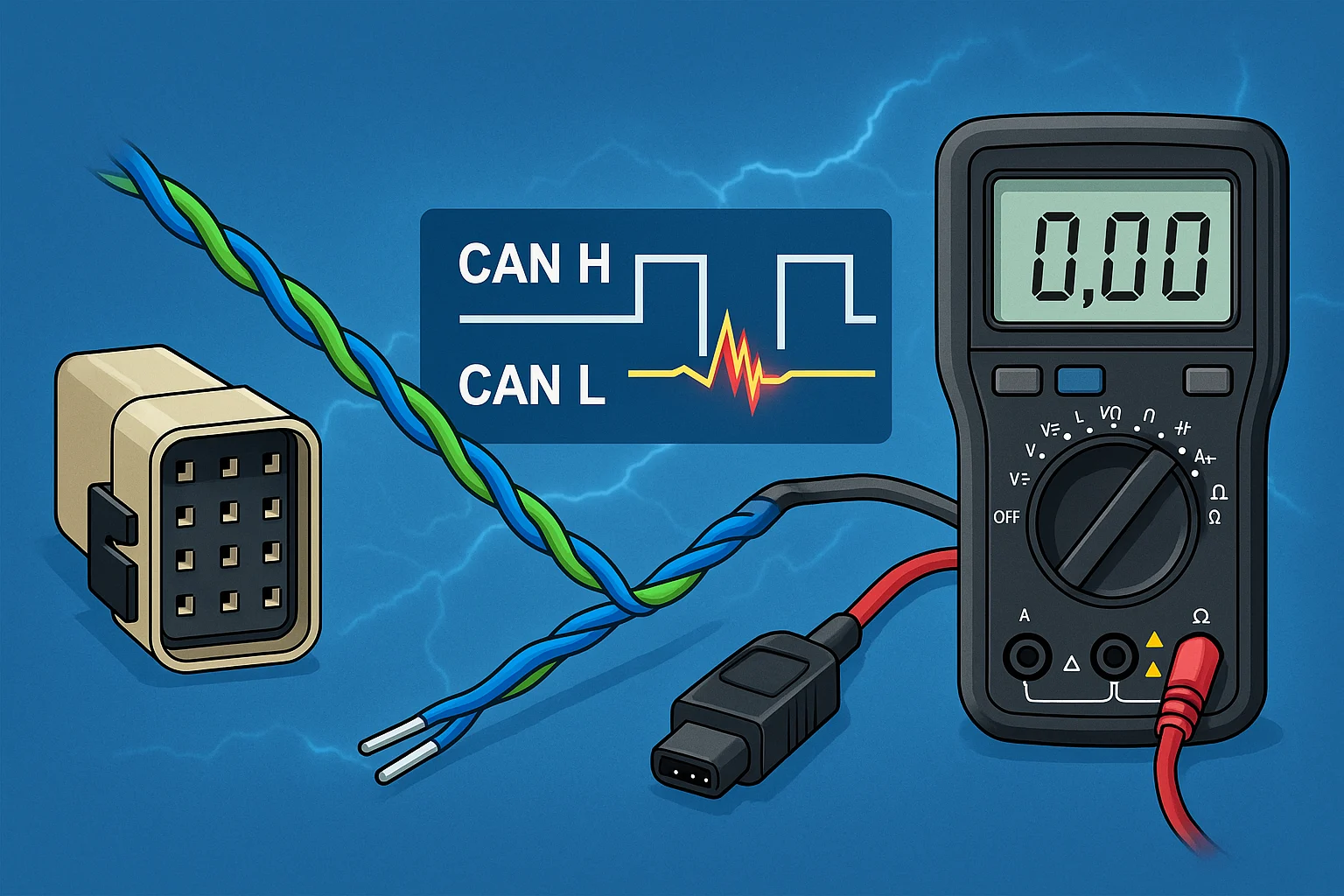
This theme shows you how to detect communication problems on the CAN bus using resistance checks, voltage measurements, and wiring inspection techniques.
Step 1: Read the text
Faults on the CAN line can cause modules to stop communicating or the vehicle to behave abnormally.
Common symptoms include warning lights, non-functional systems, or total network failure.
You can detect CAN issues by measuring voltage levels and resistance between the CAN High and CAN Low wires.
Visual inspection for corrosion, pin damage, or wire breaks is also essential.
Accurately finding CAN faults is key to restoring full communication across the vehicle.
Step 2: Estimated Cost & Earnings
Used in: CAN fault diagnostics, communication issues, network troubleshooting
Typical service value: €200 – €500
Estimated time: 1 – 4 hours
Potential per day: €400 – €1000
Step 3: Watch the Introduction Video
Step 4: Watch the video
Step 5: Common Mistakes to Avoid
Avoid these common mistakes when diagnosing faults on the CAN line.
❌ Not checking CAN resistance before deeper diagnostics
⚠️ Result: Basic wiring faults are missed early.
✅ Correct way: Measure resistance (~60Ω) between CAN High and CAN Low first.
❌ Assuming a module is faulty without checking wiring
⚠️ Result: Expensive modules replaced unnecessarily.
✅ Correct way: Inspect wiring, connectors, and pins before blaming modules.
❌ Not isolating the faulty module correctly
⚠️ Result: Network remains down and fault source is unclear.
✅ Correct way: Disconnect modules step-by-step to identify the one causing the fault.
Step 6: Pass the test
What is a common cause of communication failure on the CAN line?
Step 7: Pass the test
Choose the correct word to complete the sentence:
A wire can cause CAN bus communication failure.
Step 8: Pass the test
Decide if the statement is True or False, then press Check answer.
Step 9: Buy a tool
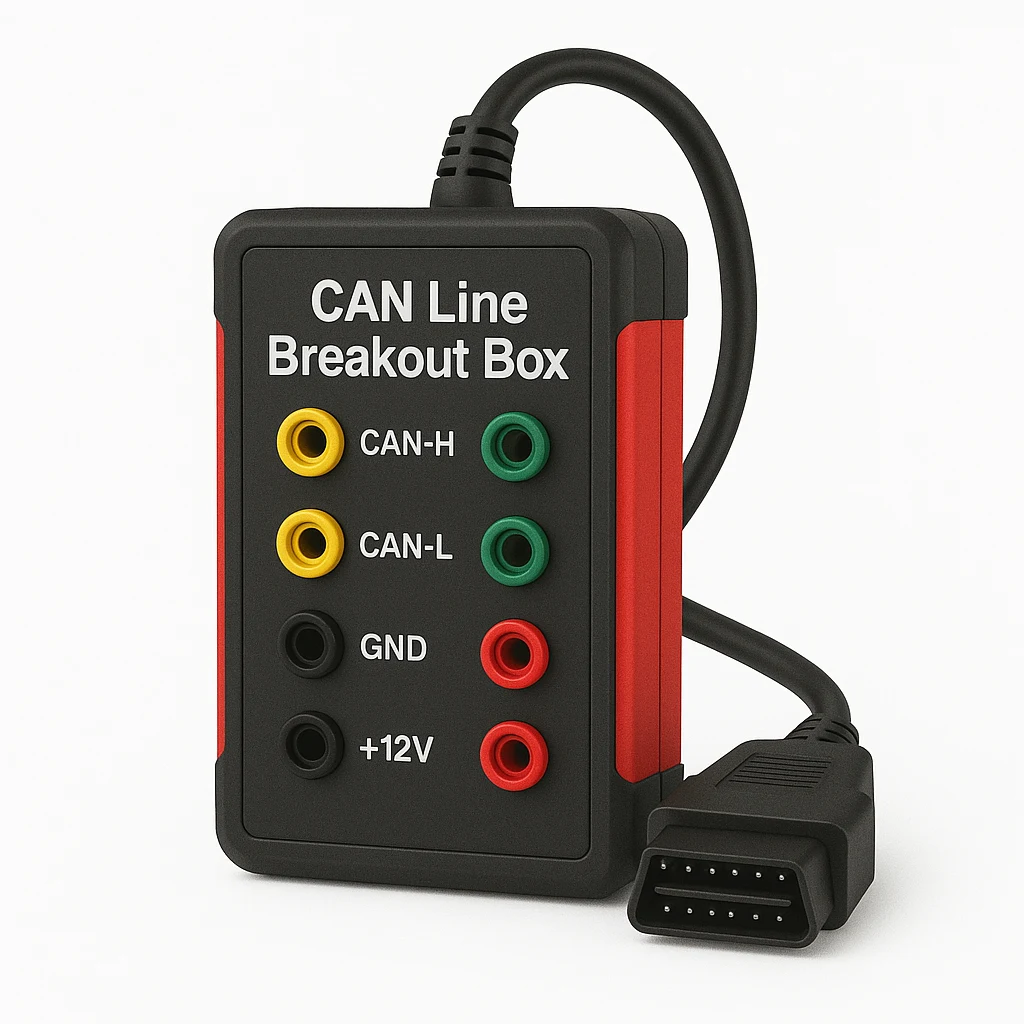
After this lesson, we recommend you search for a CAN line breakout box. This tool allows you to tap safely into the CAN wiring to monitor communication signals, measure voltage levels, and detect wiring faults without damaging the harness. It’s essential for diagnosing communication issues between ECUs in modern vehicles.
Step 10: Check Your Knowledge
If you cannot check all boxes — review the lesson again before moving on.